
Thank you for reading this post, don't forget to subscribe!
But getting a green bedroom right isn’t about slapping forest green on the walls and calling it restful. Context matters. So does pairing. And lighting. And the mood you want — cozy, fresh, luxurious, uncluttered?
If you’ve ever loved the idea of green but weren’t sure how to pull it off without it feeling too cold, too dark, or just off — this is for you.
Why Green Works in the Bedroom If You Get It Right

Let’s start with the obvious question: Is green even a good paint color for bedrooms?
Yes — but conditions apply.
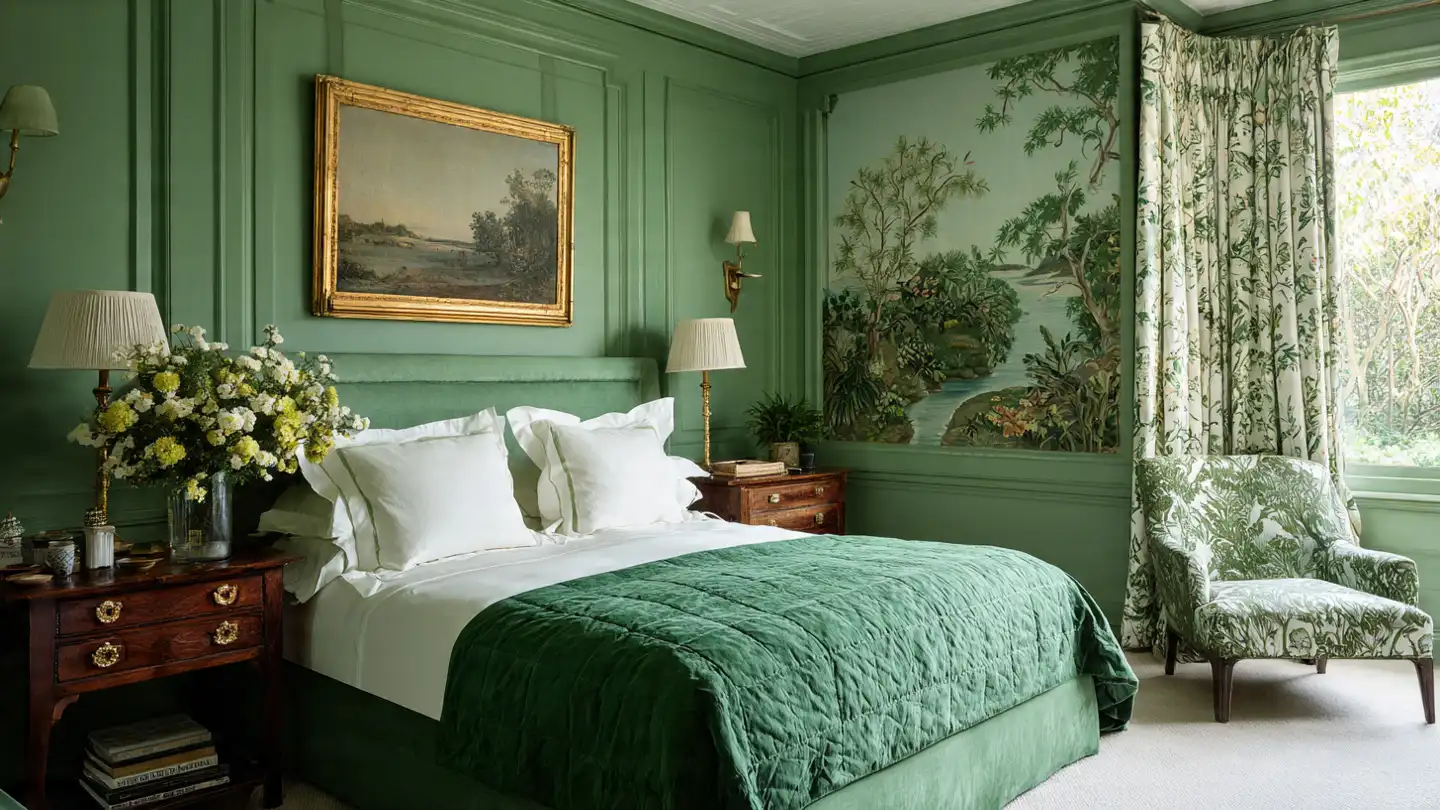
Green, when used well, acts almost like a bridge between indoor and outdoor space. It brings in nature’s calm — but doesn’t demand as much design effort as, say, blues or neutrals. Think sage walls with cream linen sheets. Olive green paired with natural wood. A leafy accent wall if you’re feeling bolder.
But the key here is this: not all greens work. The shade, the room’s lighting, the size of the space — they all need to be considered. Green can soothe… or it can suffocate.
The Psychology of Green: What It Feels Like to Sleep in It

Green reminds our brain of nature. It’s connected to growth, renewal, and calm. Research from Verywell Mind suggests that green can lower heart rate, reduce stress, and even promote focus and balance.
That’s why it works so well in bedrooms — especially if your day-to-day is full of screen time and stress. A green room acts like a reset button before bed and in the morning.
But shade matters. Deep greens (like emerald) can feel luxurious but heavy. Pale greens (like mint, pistachio, or soft sage) feel light and calming — perfect if you want your room to feel airy but interesting.
Choosing the Right Shade: Not All Greens Are Equal

Here’s where most people make mistakes.
They choose the green they like in the can – not the one that works in their space.
Soft, muted greens:
- Best for: Natural light-filled rooms, minimalist spaces
- Feels like: Calm, clean, grounded
- Try: Sage green, olive, pistachio, or eucalyptus
Dark, rich greens:
- Best for: Cozy nooks, large rooms that need depth
- Feels like: Dramatic, luxurious, moody
- Try: Forest green, emerald, pine
Bright or lime greens:
- Best for: Playrooms – not bedrooms
- Feels like: Energizing… perhaps too energizing before bed
Joanna Gaines’ favorite, Retreat by Sherwin-Williams, hits that sweet spot between muted but not dull. It’s a medium gray-green that pairs beautifully with soft whites and warm woods.
What NOT to Pair with Green (And Big Mistakes to Avoid)

Green doesn’t play well with all colors — and combining it wrong can make your room feel mismatched or jarring.
Avoid:
- Neon accents (pink, orange, or yellow): Too loud — energy imbalance
- Cool grays: Often clash or make the green feel muddy
- Cherry red or yellowy beiges: These fight with green instead of supporting it
Also, steer clear of painting all four walls in a dark green unless you have very high ceilings or loads of natural light. It can feel heavy fast.
How to Make Green Pop (Without Overdoing It)

If you love green but don’t want to go full-on, here’s what actually works in real spaces:
- Paint one accent wall in olive or deep forest green, and keep the others warm white
- Use linen, rattan, or cane textures to make the green feel grounded
- Bring high contrast: matte black nightstands or brushed brass lamps
The trick is contrast and texture. Green loves warmth — not gloss.
And if you want to make green pop, pair it with muted blushes, warm taupes, or terracotta tones rather than cold colors.
Green Pairing Guide: What Actually Looks Great Together

Here’s your real-world, not-just-color-wheel green partner list:
- Green + White + Natural Wood: Clean and crisp, great for minimal lovers
- Green + Terracotta + Cream: Warm, cozy, earthy
- Green + Blush + Brass: Romantic, elegant, and slightly vintage
- Green + Charcoal + Oak: Sophisticated, moody modern
- Green + Navy + Mustard Accents: Retro without being kitsch
Remember the three-color rule in design: choose one main color (green), one supporting neutral (white/cream), and one accent or texture (wood, metal, or stone).
What Your Bedroom Color Is Doing to Your Mind (and Sleep)

Colors affect hormones, focus, and even how deeply we sleep. According to the Sleep Foundation, greens along with soft blues and muted grays are among the most sleep-supportive colors.
Worst colors for sleep:
- Bright reds
- Neon pinks
- Pure black in dark rooms
- Vibrant yellows
- Stark whites under artificial lighting
These either stimulate the brain or feel too harsh. If you’re struggling with sleep, green might be a safer bet than bolder “statement” colors.
2026 Bedroom Color Trends: What’s In, What’s Tired, What’s Wise

Every year brings new color trends, but here’s what’s actually catching on (not just on Pinterest boards):
Trending in 2026:
- Earth-toned greens (think clay mixed with moss)
- Green + muted peach combos
- Two-tone wall finishes (bottom green, top white)
- Warm neutral backdrops with green furniture
Falling out:
- Stark monochromatic gray rooms
- All-white minimalist bedrooms
- Cool blue-heavy palettes
People are craving connection to nature, warmth, and layered personality in their spaces.
Real Bedrooms, Real Stories: Turning Green into Comfort

Emma, a freelance designer in Portland, turned her cramped apartment’s tiny bedroom into a restful oasis by painting one wall sage, hanging a large linen curtain (with no window underneath), and adding warm lights. She says it changed how she feels waking up.
“It feels contained now,” she says. “Like the room is holding me — instead of echoing back at me.”
Sometimes, it’s just one soft green wall that makes you feel safe again.
The “Three-Color Rule,” Explained Without the Jargon
It’s simple. Pick three colors for your space — in specific roles:
- Main color (walls or bedding): ex. Soft olive green
- Neutral base (floors, headboard): ex. Cream or wood
- Accent color: ex. Brass lighting or dusty pink pillows
The story each room tells comes from balance — not matching.
Specific Tips to Make a Green Bedroom Look More Expensive
- Swap out silver finishes for brass or matte black
- Layer different textures (velvet throws, crisp linen, aged wood)
- Hang real art — not just generic quote prints
- Use floor-to-ceiling curtains, even if windows are small
Green sets the base — the rest is about editing.
At a Glance: Best and Worst Bedroom Color Choices
| Color | Good for Bedrooms? | Why |
|---|---|---|
| Sage Green |  | Calming, natural |
| Forest Green | | Ideal for accents or large rooms |
| Bright Red |  | Overstimulating |
| Warm Beige | | Neutral and adaptable |
| Neon Yellow | | Energizing, not restful |
| Dusty Blue | | Supports sleep and calm |
| Charcoal | | Cozy and stylish |
Step-By-Step: Updating a Bedroom with Green — the Smart Way
- Test swatches on all four walls — greens look different in daylight vs lamplight.
- Start with just one wall if you’re unsure.
- Layer in green fabrics — curtains, cushions, or a throw.
- Play with texture — don’t go flat and matchy.
- Stay grounded with neutrals — white, beige, or natural tones.
- Use mirrors if the space isn’t large — green can shrink a visual space when overused.
Simple Do’s and Don’ts for a Green Bedroom that Works

DO:
- Keep lighting warm-toned
- Test paints under both day and night lighting
- Choose soft greens for small rooms
- Pair with stone, woven baskets, or wood
DON’T:
- Mix more than one bold color with green
- Use cool gray or sterile white unless you soften them
- Over-accessorize — green needs space to breathe
- Forget the impact of textiles
Ready to calm your space — not just decorate it? A green bedroom doesn’t just follow a trend. It brings back something most of us forgot we needed: peace.
Need more sleep and wellness backed insights?
Check out studies on color psychology and sleep or browse colors with real-time visualizers at Sherwin-Williams and Behr.
Let your space feel like you. And let green remind you what “calm” actually looks like.


