
Thank you for reading this post, don't forget to subscribe!
That’s what this is. Every craft idea here comes from hands-on testing. I’ll tell you what works, what doesn’t, how many pipe cleaners you need, and where most people mess things up. Whether you’re a parent looking for rainy-day activities, a teacher building a craft station, or an adult who just likes making tiny flowers — this covers it all.
So What Can You Make Out of Pipe Cleaners?

The short answer is: almost anything. Pipe cleaners bend, hold their shape, twist together, and come in every color imaginable. People make animals, flowers, jewelry, fidget toys, holiday ornaments, finger puppets, pencil toppers, keychains, bows, decorative stands, and full bouquets. They work for toddlers learning to grip things and for adults building intricate floral arrangements.
The reason they’re so versatile is the wire core wrapped in soft fiber. You get structure and texture in one material. That makes them forgiving for beginners and surprisingly detailed for experienced crafters. You can combine them with pom poms, googly eyes, beads, cardstock, and glue to build things that genuinely impress people.
Why Pipe Cleaners Work So Well for Crafting
Three reasons. They’re cheap — a pack of 100 costs a couple of dollars at most craft stores like Michaels or JOANN. They’re safe for small hands when supervised. And they require zero drying time, no heat tools, and no special skills. You twist, bend, cut, and you’re done. That instant feedback loop is why kids stay engaged with them longer than with paint or clay.
First Things First — What Are Pipe Cleaners Called Now?

If you walk into a craft store and ask for pipe cleaners, everyone will know what you mean. But the official craft-world name is chenille stems. The original pipe cleaners were designed to clean tobacco pipes — that’s where the name comes from. The ones sold for crafting today are softer, come in more colors, and aren’t really meant for pipe cleaning anymore. Chenille stems is just the industry term. Same product, different label.
You can still buy actual pipe cleaners meant for cleaning pipes, though. Those are stiffer, usually white or tan, and sold at tobacco shops. Don’t use those for kids’ crafts. They’re rougher and less flexible.
What Age Can Use Pipe Cleaners Safely?
Most craft experts and educators recommend pipe cleaners for kids aged three and up with supervision. The wire ends can poke, so you want to fold the tips over before handing them to young children. Can a two-year-old use them? With direct supervision and pre-bent tips, yes — but they’re better suited to threading beads onto a pipe cleaner (a great fine motor activity) than shaping complex figures.
For independent use, age five and up is the sweet spot. That’s when kids have enough hand strength and coordination to bend and twist without frustration.
Materials You Need Before You Start

Here’s what I keep in my craft box at all times. This covers almost every project in this post:
- Chenille stems (pipe cleaners) in assorted colors — grab a 350-pack from Amazon or a craft store
- Small pom poms in various sizes
- Googly eyes (self-adhesive ones save time)
- Hot glue gun and glue sticks (adult use) or white school glue (kids)
- Scissors or wire cutters
- Pony beads in assorted colors
- Cardstock or construction paper
- A ruler (helpful for measuring consistent lengths)
That’s it. You don’t need anything fancy. The projects that look the best usually use the fewest materials.
How to Make Pipe Cleaner Animals (Step-by-Step for Each)
Animals are the most popular pipe cleaner craft category by far. Here’s how to approach the most requested ones.
Dogs, Cats, and Bunnies

For a dog, start with one brown or tan pipe cleaner. Fold it in half — that fold becomes the nose. Twist a small loop for the head, leave two short sections for front legs, twist again for the body, and split the remaining ends into back legs. Bend a second pipe cleaner into floppy ears and twist it around the head. Add googly eyes with a dab of glue.
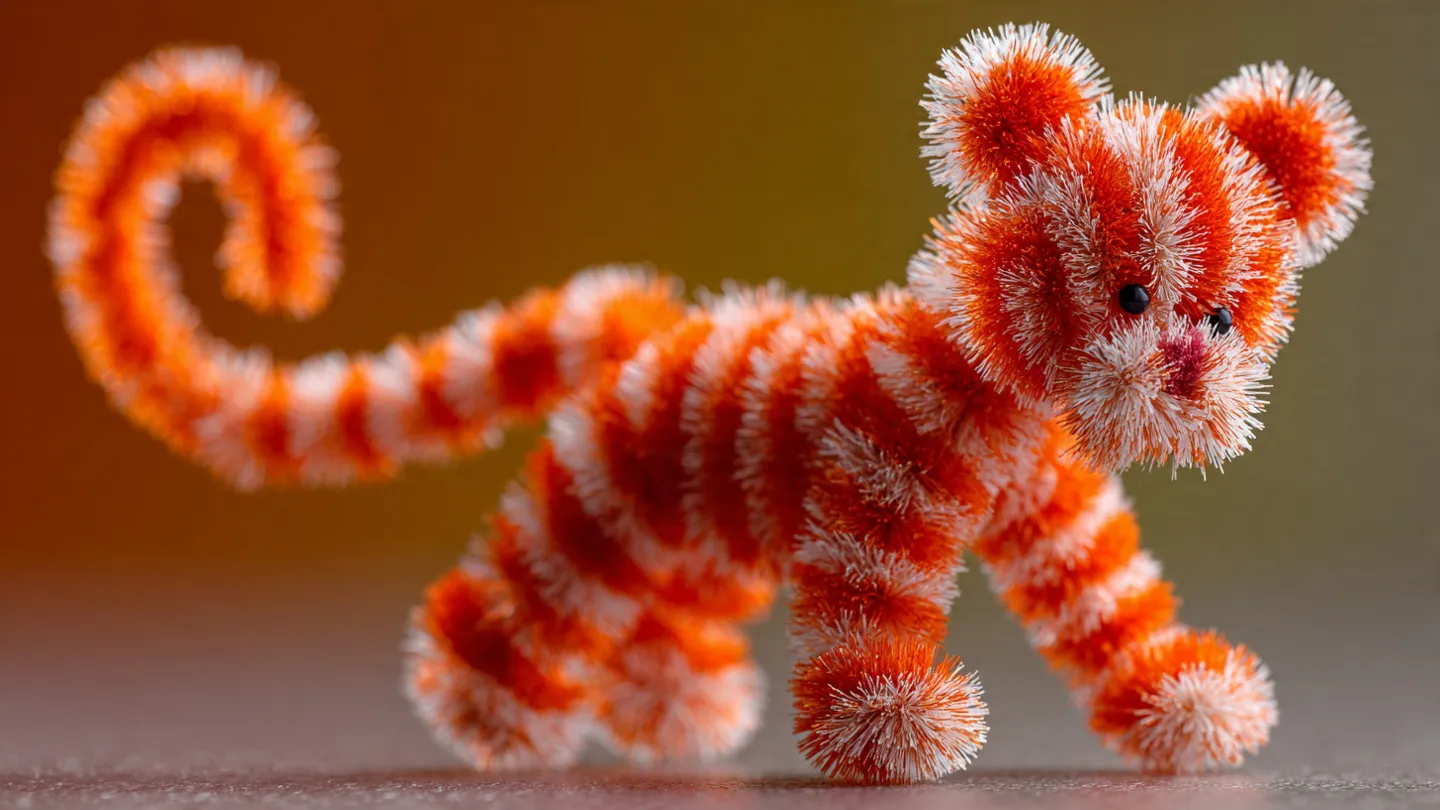
A cat follows the same body structure, but you make the ears pointy (two small triangular loops at the top of the head) and add a long curled tail from a separate pipe cleaner.
A bunny uses white or pink pipe cleaners. The key difference is the ears — make them tall and oval-shaped, about two inches long each. Glue a pom pom on the back for the tail. This one takes maybe five minutes and kids love it.
Octopus, Crab, and Stingray

The octopus is one of the easiest crafts ever. Take four pipe cleaners, stack them, and twist them together at the center. That gives you eight legs. Curl each leg by wrapping it around a pencil. Glue a medium pom pom on top for the head, add googly eyes, and you’re done. Five minutes, max.
A crab uses three red or orange pipe cleaners. Fold one for the body (a flat oval shape), use the second one cut in half for four legs (two on each side, bent into zig-zag shapes), and cut the third one to create two claws — small loops pinched at the tips.
A stingray is a flat diamond shape made from one pipe cleaner bent and twisted, with a long tail trailing behind. Simple but cool looking. Use a blue or gray one.
Monkey, Penguin, Duck, and Mouse

For a monkey, use brown pipe cleaners for the body and limbs, and a tan or beige one for the face and belly. Shape a round head, coil a long tail, and curl the hands and feet slightly. The tail is what makes it recognizable — give it a good spiral.
A penguin is black and white. Make an oval body from black, wrap a white pipe cleaner around the front for the belly, and add an orange bead or bent pipe cleaner piece for the beak. Tiny orange feet at the bottom finish it off.
A duck uses yellow pipe cleaners. Round body, small round head on top, orange bead beak, and flat feet made from bent orange pieces. Add a small tail feather poking up from the back.
A mouse is one gray pipe cleaner twisted into a body with a long thin tail, round ears made from small loops, and a pink bead for the nose.
Snake, Fish, Caterpillar, and Dinosaur

A snake is the easiest craft on this entire list. Take one pipe cleaner, twist one end into a tiny head shape, and bend the rest into an S-curve. Done. Add googly eyes and a red forked tongue from a small piece of red pipe cleaner.
A fish uses one pipe cleaner bent into an oval with a triangular tail pinched at the back. Add a small bead eye.
A caterpillar is a series of humps — bend one pipe cleaner into a wave shape so it stands with arches. Add tiny antenna from a second color and googly eyes at the front.
A dinosaur takes a bit more work. Use two or three green pipe cleaners. One forms the body, neck, and tail (a long S-shape standing on two leg loops). The second adds front legs and back leg support. A third can create spines along the back. This one takes patience but looks great.
Turtle and Pig

A turtle starts with a green pipe cleaner coiled into a flat spiral for the shell. A second one forms the head, four stubby legs, and a tiny tail, all attached underneath the shell with a twist.
A pig uses pink pipe cleaners. Round body, round snout (a small coil at the front), triangle ears, four short legs, and a curly tail. The curly tail is the fun part — wrap it tight around a pencil and release.
How to Make Pipe Cleaner Spiders and Skeletons
Simple Spider and Pom Pom Spider

Take two black pipe cleaners, cross them in an X, and twist at the center. Spread the eight legs out and bend each one halfway for that classic spider-leg angle. For a pom pom spider, glue a large black pom pom at the center crossing point and add googly eyes. This is a staple Halloween craft and takes under three minutes.
Tall Spiders for Halloween Displays

For a tall spider, use four full-length pipe cleaners but make the legs much longer. Bend them so the body sits high off the table — about four to five inches up. These look amazing on windowsills or shelves in October. Use black and orange ones together for a festive touch. A tip: twist the leg joints tight so it stands stable. Loose twists cause floppy legs.
Mummy and Skeleton Builds

A mummy is a pipe cleaner figure (one pipe cleaner twisted into a stick-figure body) wrapped tightly in white yarn or thin strips of white fabric. Leave a tiny gap at the face and glue on two googly eyes. The wrapping is what sells it.
A skeleton or bones build uses white pipe cleaners. Form a stick figure — head loop, spine, arms, legs — and then add detail. Bend small rib shapes and attach them to the spine section. Make the hands and feet slightly wider. This project works best for kids eight and up because the rib detail requires patience. You can reference anatomy charts from sources like InnerBody to get proportions roughly right.
How to Make a Grinch Out of Pipe Cleaners

This is a holiday favorite. Use a green pipe cleaner for the body and head. Shape a tall, slightly curved head (the Grinch has that signature slouchy posture). Add a tiny red heart from a red pipe cleaner twisted into a heart shape — glue it to his chest. Use a small piece of red felt or red pipe cleaner for his Santa hat. Googly eyes and a drawn-on smirk with a fine-tip marker complete the look. The key to making it recognizable is the hat and the heart. Without those, it just looks like a green stick figure.
How to Make Pipe Cleaner Flowers That Look Real
This is where pipe cleaners really shine. Flower crafts range from three-minute kid projects to detailed arrangements that people mistake for store-bought.
Tulips, Lilies, Daisies, and Roses Step by Step

Tulip: Bend a pipe cleaner into three petal-shaped loops at the top, gather them at the base, and twist onto a green stem pipe cleaner. The three-petal cluster gives it that classic tulip silhouette.
Lily: Use a white or pink pipe cleaner. Create six narrow pointed loops radiating from a center point. Curl the tips of each petal slightly outward. Attach a green stem and add a yellow pipe cleaner stamen in the center.
Daisy: Take a yellow pipe cleaner and coil it into a tight flat circle for the center. Then loop a white pipe cleaner around it repeatedly, creating eight to ten evenly spaced petal loops. Attach to a green stem.
Rose: This one gets the most questions. Wrap a red pipe cleaner around a pencil tightly, then slide it off and gently spread the coils outward from the top. It creates a spiral that mimics rose petals. Use two pipe cleaners twisted end-to-end for a fuller rose. This technique comes up often in craft communities like those on Reddit’s r/crafts.
How to Make a Full Bouquet

A solid bouquet uses ten to fifteen flowers. Mix colors — reds, pinks, yellows, whites, purples. Vary the flower types so it doesn’t look uniform. Bundle the green stems together and wrap them with a ribbon or a green pipe cleaner at the base. Stand them in a small vase, mason jar, or a pipe cleaner stand (a coiled base you make from three green pipe cleaners twisted together and spiraled flat).
For a bouquet that looks full, you need roughly thirty to forty pipe cleaners total — about two per flower plus stems and leaves. Cut small leaf shapes from green pipe cleaners and twist them onto the stems at different heights.
Making Fake Flowers Look Full and Realistic
Two tricks. First, layer your petals. Don’t make flat single-layer flowers. Stack two or three layers of petal loops in decreasing sizes and nest them inside each other. Second, slightly bend and curve every petal individually. Uniform petals look artificial. Irregular ones look organic. This small step changes everything.
Pipe Cleaner Fidgets, Rings, Bracelets, and Jewelry

Fidget toys are simple — twist two or three pipe cleaners into a spring shape, a zigzag, or a series of connected loops. Kids fidget with them by bending, squeezing, and reshaping. They’re quiet, cheap, and classroom-friendly.
Rings are made by wrapping a pipe cleaner around your finger two or three times, then shaping a small decoration on top — a flower, a star, a spiral. For beaded rings, thread small beads onto the pipe cleaner before wrapping it into a ring shape. The beads sit on top and add sparkle.
Bracelets work the same way but use a full-length pipe cleaner. Twist two colors together for a candy-cane effect. Add pony beads for color. Bend the ends into small hooks or loops so it clasps on the wrist. These are huge at birthday parties and craft fairs.
Finger Puppets, Pencil Toppers, Keychains, and Bows

Finger puppets or finger people — wrap a pipe cleaner around your finger three times to create a tube. Slide it off. That’s the body. Add a small pom pom head, googly eyes, and tiny pipe cleaner arms. Make a whole family in different colors.
Pencil toppers work similarly. Wrap a pipe cleaner around the top of a pencil and shape a character, animal, or star on top.
Keychains — make a small figure or shape (a cherry is popular — two red bead “cherries” on bent pipe cleaner stems with a green loop leaf) and attach it to a keychain ring from any craft store.
Bows — fold a pipe cleaner into two loops with tails hanging down. Pinch and twist at the center. Use a second pipe cleaner to wrap the center tight. Fluffy and quick.
Christmas Pipe Cleaner Crafts for Kids
Christmas Trees and Ornaments

A Christmas tree is a green pipe cleaner bent into a zigzag triangle — wide at the bottom, narrow at the top. Add a small yellow star on top from a bent piece. Decorate with tiny beads threaded on before shaping, or glue mini pom poms onto the branches afterward. Attach a small loop of string at the top and it becomes an ornament.
Ornaments can be anything — candy canes (twist a red and white pipe cleaner together, bend the top into a hook), wreaths (form a green pipe cleaner into a circle, add a red bow), or snowflakes (cross three white pipe cleaners at the center and bend the tips into small decorative curls).
Easy Holiday Projects That Take Minutes
Candy cane ornaments take sixty seconds. Reindeer faces (brown pipe cleaner antlers glued to a pom pom with a red bead nose) take two minutes. A Grinch finger puppet takes three. These are perfect for classroom holiday parties or stocking-stuffer crafts on Christmas Eve. For more holiday craft ideas, Martha Stewart’s craft section has solid inspiration.
Pipe Cleaners for Fine Motor Skills — Why Teachers Love Them

Bending, twisting, threading beads, and shaping pipe cleaners builds hand strength, dexterity, and coordination in young children. Occupational therapists and early childhood educators use them regularly. The resistance of the wire inside gives muscles a gentle workout. According to resources from the National Association for the Education of Young Children (NAEYC), hands-on manipulative play like this supports developmental milestones in preschool-aged children. If you’re a parent looking for screen-free activities that build real skills, pipe cleaners are one of the best investments you’ll make — and they cost almost nothing.
Wait — How Long Should You Leave Pipe Cleaners in Your Locks?

This question pops up more often than you’d expect. Some people use pipe cleaners as makeshift hair rollers or loc maintenance tools. If you’re using them for curling, don’t leave them in longer than overnight. The wire can crease hair or cause breakage. For locs, they’re sometimes used temporarily to set shape, but most locticians recommend proper loc ties or bands instead. Pipe cleaners weren’t designed for hair, so treat them as a short-term hack, not a routine tool.
FAQ
What can you make out of pipe cleaners easily?
Animals, flowers, rings, fidgets, finger puppets, pencil toppers, and holiday ornaments. Most projects take under ten minutes.
What are pipe cleaners now called?
Chenille stems. Same product — the name just reflects their craft use rather than their original tobacco pipe purpose.
Can 2-year-olds use pipe cleaners?
With direct adult supervision, yes. Fold the wire tips over so they can’t poke. Bead-threading activities work best for this age.
How many pipe cleaners do you need for a bouquet?
Around thirty to forty for a full bouquet of ten to fifteen flowers, including stems and leaves.
How do you make pipe cleaner flowers look real?
Layer petals in multiple sizes, curve each petal individually, and avoid perfect symmetry. Irregularity mimics real flowers.
Are pipe cleaners good for fine motor skills?
Yes. Bending and twisting builds hand strength and coordination. Teachers and therapists use them for this purpose.
What materials do I need for pipe cleaner crafts?
Chenille stems, pom poms, googly eyes, glue, scissors, pony beads, and cardstock cover almost every project.
How do you make a pipe cleaner spider?
Cross two pipe cleaners at the center, twist, spread eight legs, bend each leg at the midpoint. Add a pom pom body and googly eyes.
One last thing. The best pipe cleaner project is the one you start. Don’t overthink it. Grab a handful, twist something, see what happens. That’s how every good craft session begins — not with perfection, but with curiosity and a willingness to make something weird before you make something wonderful.

